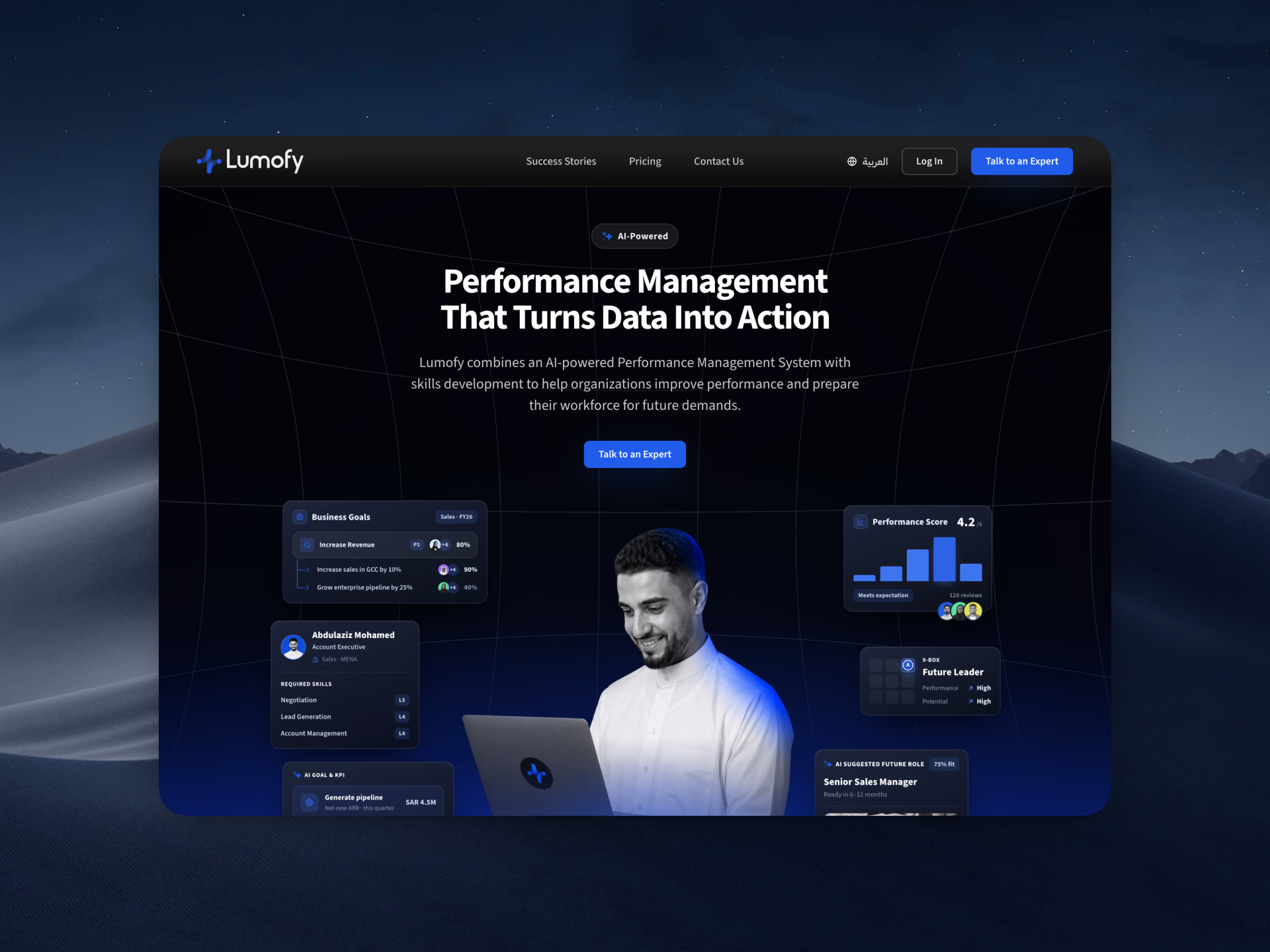
Multilingual websites, including right-to-left
Arabic that was designed rather than translated, and a layout that mirrors properly instead of leaning on a plugin.
Best for brands selling into more than one language market, particularly anyone who needs Arabic done properly.
Most multilingual sites are an English site with the words swapped. That is fine for French and obvious for Arabic, where the whole layout has to turn around and a plugin bolted on at the end cannot do it convincingly.
Right-to-left is a layout problem
Mirroring a site properly means logical properties throughout rather than left and right hard-coded, icons that flip where direction carries meaning and stay put where it does not, and numerals, dates and phone numbers that stop being reordered by the bidirectional algorithm the moment they sit in an Arabic sentence.
None of that is exotic, and all of it is invisible until it is wrong, at which point it is the first thing an Arabic reader notices. A leading plus sign on a phone number is a neutral character; drop it into a right-to-left run without isolating it and it moves to the wrong end.
Half-translated is worse than not translated
A site whose body copy is in Arabic while its buttons, form errors, dates and legal pages are in English does not read as multilingual. It reads as unfinished, and it undermines the credibility the translation was meant to buy.
Decide the scope honestly at the start. A smaller site that is genuinely complete in two languages is worth more than a large one that is complete in one and a half.
The search side has rules, and they are strict
Each language version needs a self-referential canonical, and the hreflang cluster has to be reciprocal: every version points at every other, including itself, with an x-default. Miss one link and search engines discard the cluster rather than guessing.
And the content itself has to earn its place. Machine translation with no value added is named directly in Google's scaled content abuse policy. If a market does not justify real copy, it is better not to publish that language than to publish a thin version of it.
A smaller site that is genuinely complete in two languages beats a large one that is complete in one and a half.
What a build here actually includes
Every build is scoped to the practice, but on this kind of site these are the parts that are not optional.
- Logical properties throughout, so mirroring is structural rather than a stylesheet override
- Interface, form errors, dates and legal pages translated alongside the body copy
- Bidirectional text handled where it actually breaks: numbers, phone numbers, mixed-script lines
- A reciprocal, self-referential hreflang cluster with an x-default
- A translation workflow the team can run, so a new page does not ship in one language only
What we keep seeing go wrong
None of these are hypothetical. They are the things that turn up again and again on sites in this vertical, and most of them are cheap to avoid and expensive to undo.
- A translation plugin applied to a layout that was never built to mirror
- Arabic body copy with an English interface around it
- Phone numbers and dates reordered by the bidirectional algorithm because nothing isolated them
- An hreflang cluster missing its self-reference, so search engines discard all of it
- A language published because it was cheap to add rather than because there is a market
Questions we get asked first
- Can we just use a translation plugin?
- For a language that shares the same direction, sometimes, if the copy is genuinely reviewed afterwards. For Arabic, no. The layout has to mirror, and a plugin that swaps strings on top of a left-to-right structure produces something an Arabic reader can tell is wrong within a second, even if they cannot immediately say why.
- Does a second language help our SEO?
- Only if the content is real. A properly built cluster lets each version rank in its own market, which is a genuine gain. A machine-translated one is named in Google's scaled content abuse policy as an example of what that policy covers, and thin duplicates across languages can drag the whole site rather than just the new pages.
- Do we need to translate everything?
- No, but you do need to decide the boundary deliberately and make it honest. A complete two-language site with fewer pages is stronger than a large one where the buttons and the privacy policy switch back to English. Pick the scope, finish it, then extend.
- Which platform handles this best?
- Webflow or custom code, generally. Localisation is where page builders show their limits fastest, particularly once right-to-left is involved, and it is one of the clearer signals that a project has outgrown a builder.